

EnglishNews
Hyundai AutoEver’s ‘Mobilgene Adaptive’ Achieves Highest Automotive Functional Safety Certification, ASIL-D
Hyundai AutoEver has announced that its vehicle software (SW) platform, ‘Mobilgene Adaptive’, has obtained the highest level of international automotive functional safety standard certification


Leading the SDV Era with International Certification of Software Platform Safety
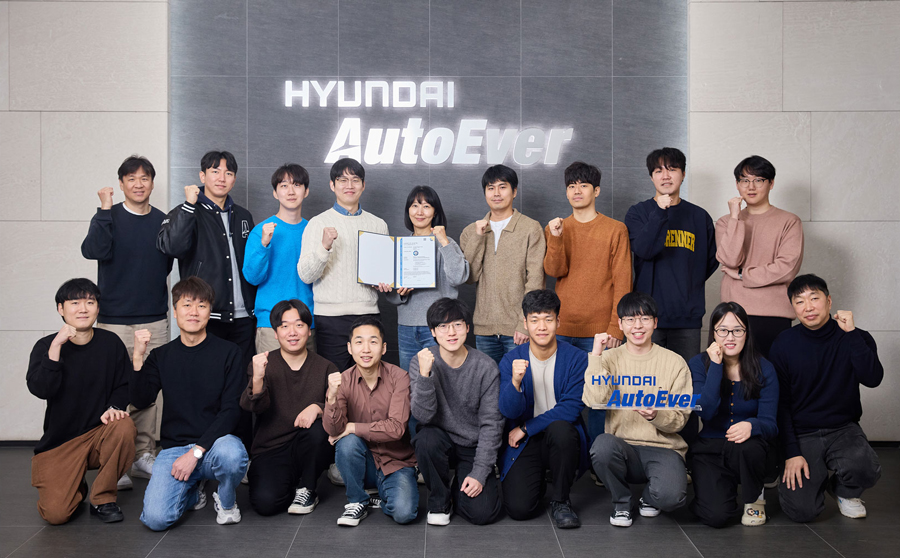
Hyundai AutoEver has announced that its vehicle software (SW) platform, ‘Mobilgene Adaptive’, has obtained the highest level of international automotive functional safety standard certification, known as ASIL (Automotive Safety Integrity Level)-D. This certification represents the most stringent level of safety for electrical and electronic systems in vehicles, as defined by the international standard ISO 26262.
ASIL is an automotive safety integrity level that verifies the safety of electrical and electronic systems installed in vehicles. Established by the International Organization for Standardization (ISO) in 2011, it aims to reduce risks caused by malfunctions in these systems. The ASIL grades range from A to D, with D being the highest level, indicating that the possibility of system failure leading to an accident is extremely low.
Hyundai AutoEver previously obtained ASIL-D certification for its ‘Mobilgene Classic’ platform in 2021. With the latest certification for ‘Mobilgene Adaptive’, the company has once again demonstrated the safety and reliability of its vehicle SW platforms. ‘Mobilgene’ is Hyundai AutoEver’s independently developed standard vehicle SW platform for Hyundai Motor Group, currently applied to all mass-produced cars from Hyundai Motor, Kia, and Genesis. The platform functions similarly to an operating system (OS) in a computer, integrating and controlling the vehicle’s internal communication systems and functions.
The ‘Mobilgene’ platform is divided into ‘Mobilgene Classic’ and ‘Mobilgene Adaptive’. ‘Mobilgene Classic’ is a SW platform for controllers based on general microcontroller units (MCUs). In contrast, ‘Mobilgene Adaptive’ is optimized for controllers based on high-performance application processors (APs) that require rapid computation of large amounts of information, such as connectivity, infotainment systems, and autonomous driving systems. ‘Mobilgene Adaptive’ was recently applied for the first time to the ‘Vehicle Communication Controller (CCU)’ used in the connectivity features of Hyundai’s new Palisade (LX3), marking the start of its mass production.
This marks the fifth international standard certification related to vehicle SW that Hyundai AutoEver has obtained. ‘Mobilgene Classic’ has acquired ‘A-SPICE CL3’, which verifies the quality of the development process, as well as ‘ASIL-D’ certification. Additionally, Hyundai AutoEver’s vehicle SW development system has received ‘CSMS (Cyber Security Management System) Level 3’ certification, proving that it systematically manages cyber security risks throughout the entire process from design to testing and post-production. The company has also become the first in Korea to obtain ‘SOTIF (Safety Of The Intended Functionality)’ certification, an international standard concerning the safety of autonomous vehicles.
With this latest certification, Hyundai AutoEver plans to continue supplying vehicle SW platforms optimized for the Software-Defined Vehicle (SDV) era, striving to meet customer demands. CEO Kim Yoon-gu stated, “By developing customer-centric vehicle SW platforms based on globally top-level technology and quality, we will enhance our business competitiveness in the SDV era.”
By achieving ASIL-D certification for both ‘Mobilgene Classic’ and ‘Mobilgene Adaptive’, Hyundai AutoEver is solidifying its position as a leader in the vehicle software industry. As the automotive sector rapidly transitions toward software-driven innovation, ensuring the highest levels of safety and reliability in vehicle software platforms is increasingly critical. Hyundai AutoEver’s commitment to adhering to international safety standards not only enhances the trust in their products but also contributes to advancing the overall safety of modern vehicles.

모빌리티(Mobility)의 미래 비즈니스 전략을 찾다
- 모빌리티타임즈 (mobilitytimes.net)









e-Mail: mobi@icnweb.co.kr
e-Mail: mobi@mobilitytimes.net


