

EnglishNews
Bosch Introduces Real-Time Road Hazard Service to Enhance Traffic Safety
Bosch has launched an innovative road hazard service designed to significantly improve road safety by providing real-time warnings to drivers about potential dangers


Cloud-based real-time service increases road safety and considerably reduces the risk of accidents
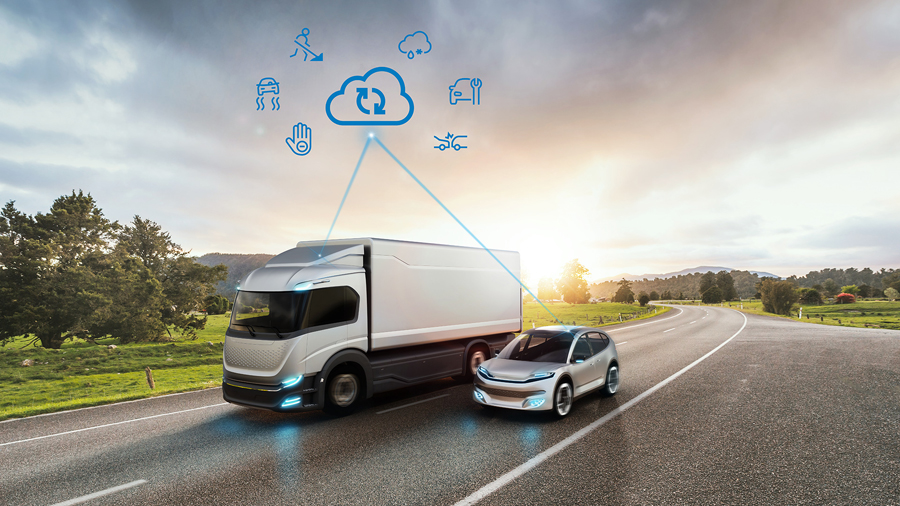
Bosch has launched an innovative road hazard service designed to significantly improve road safety by providing real-time warnings to drivers about potential dangers. Initially rolled out in millions of passenger vehicles across Europe in June 2024, the service will be available in Mercedes-Benz Trucks starting in December 2024. This cloud-based system alerts drivers to various road hazards, including accidents, wrong-way drivers, slippery roads, poor visibility, heavy rain, and wind, as well as broken-down vehicles.
Dr. Markus Heyn, a member of Bosch’s board and chairman of its Mobility business sector, emphasized the importance of the service, stating, “Our predictive road hazard service alerts drivers to dangerous conditions well in advance, helping them avoid critical situations.” In commercial vehicles, the system can also assist in rerouting drivers to avoid emerging dangers, thus enhancing both safety and efficiency.
How Bosch’s Road Hazard Service Works
The system relies on anonymized data collected from millions of vehicles in Bosch’s global customer fleet, as well as data from third-party sources like weather services and road operators. Fleet vehicles equipped with the service provide real-time information such as local temperatures, the activation of windshield wipers, and accident reports. For instance, if several vehicles in an area have their wipers on at full speed, the system cross-checks this data with weather reports to determine whether conditions like aquaplaning might be a risk. If so, the driver is warned to reduce speed.
The system can also detect when visibility is compromised, such as in fog, by analyzing the use of rear fog lights in affected vehicles. Bosch’s algorithm then determines if a warning should be issued to help drivers navigate safely.
Additionally, the service includes a wrong-way driver alert, notifying drivers if they are at risk of encountering or becoming a wrong-way driver themselves.
Integrated with Bosch’s Connected Map Services
The road hazard service is part of Bosch’s broader connected map services, which aim to increase both safety and convenience for drivers. These services combine data from multiple vehicles to enhance driver assistance systems, such as adaptive cruise control and emergency braking. For instance, when roads are wet or slippery, the service helps the vehicle initiate emergency braking earlier than usual to prevent accidents.
Connected map services play a crucial role in advancing assisted and automated driving. They provide an extra layer of data beyond traditional radar and video sensors, ensuring that vehicles receive all the necessary information for safe driving, even in challenging conditions. This system enhances the vehicle’s ability to predict and respond to road conditions, making driving both safer and more efficient for everyone on the road.

모빌리티(Mobility)의 미래 비즈니스 전략을 찾다
- 모빌리티타임즈 (mobilitytimes.net)













e-Mail: mobi@icnweb.co.kr
e-Mail: mobi@mobilitytimes.net


